Eldredgeops Camouflage
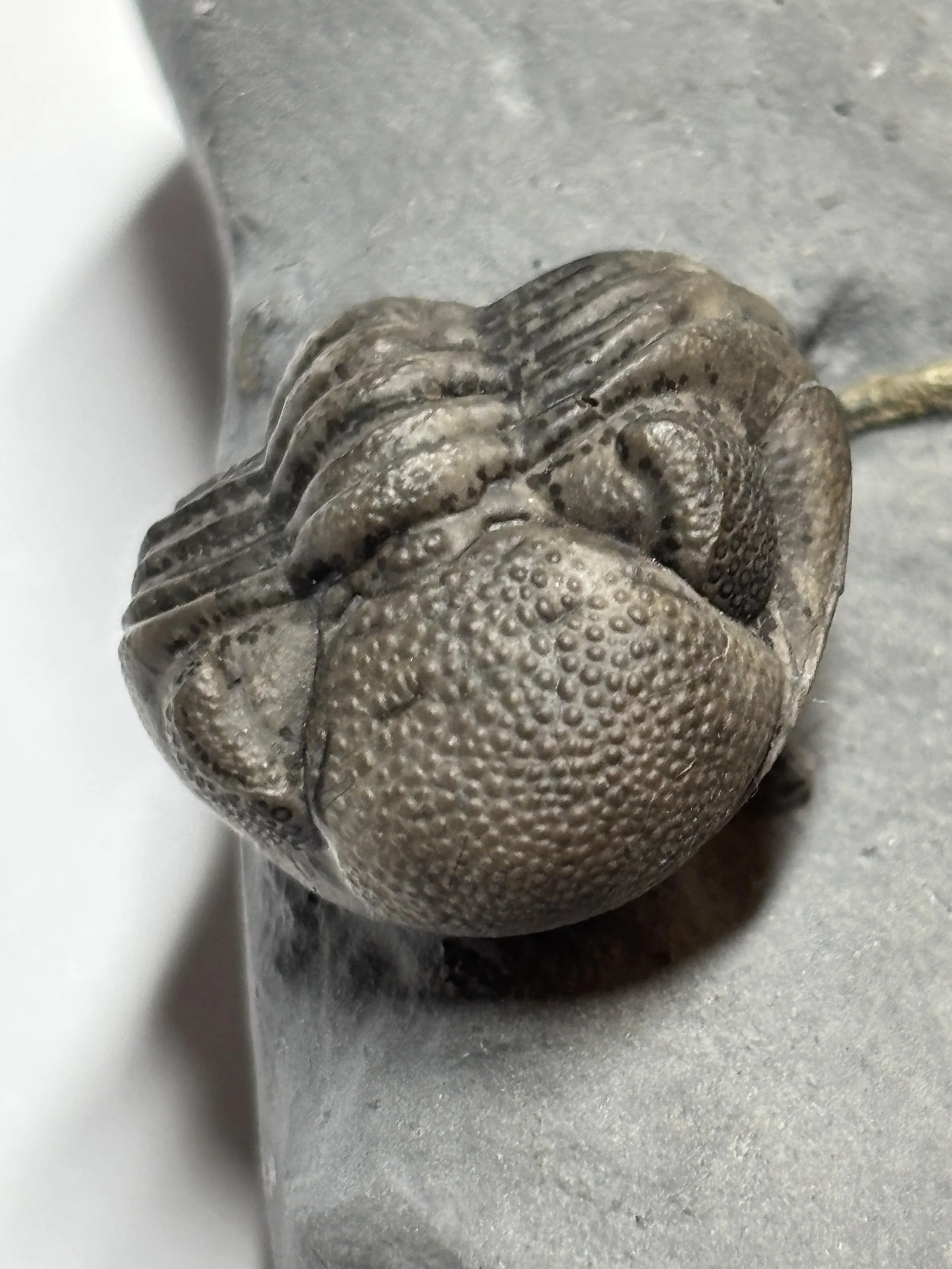
The bulbous glabella of the genus indicated that the trilobite was an active predator in its habitat
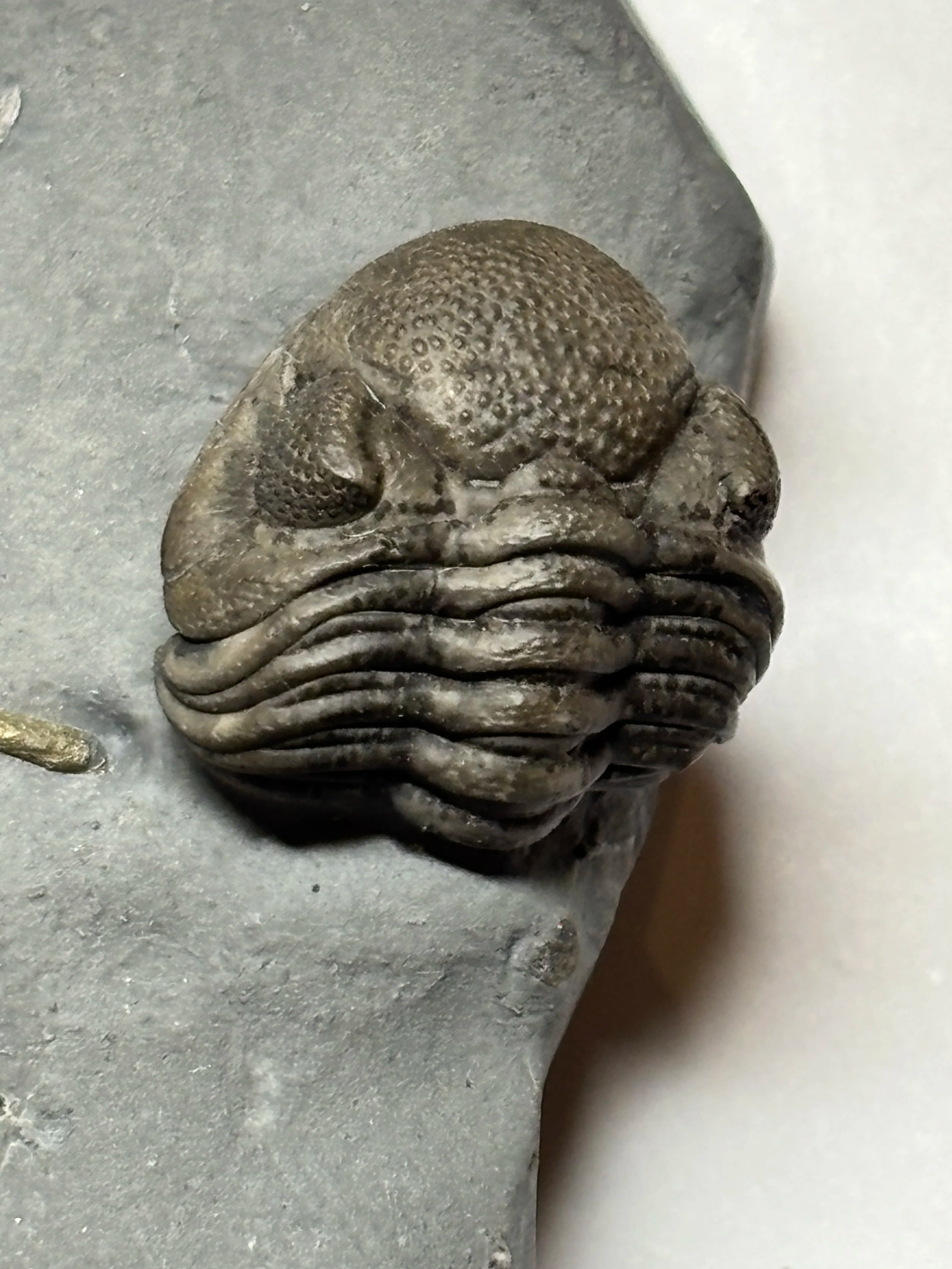
“Camouflage pattern” Eldredgeops rana enrolled (18.4mm), Hamilton Group, Wanakah Shale, New York
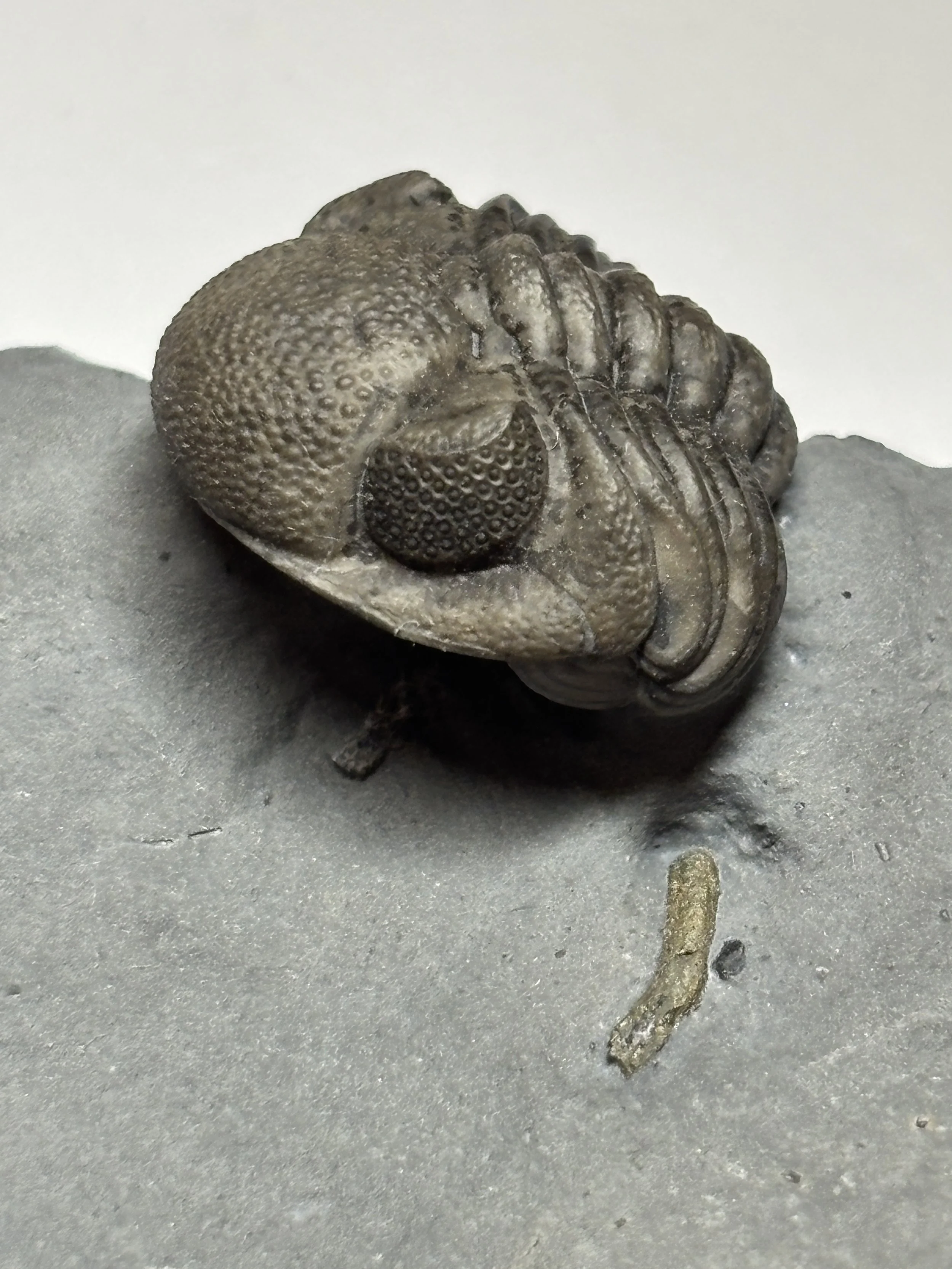
A closer view of the schizochroal eyes found exclusively within the Phacopina suborder
Introduction to Topic:
Eldredgeops rana is representative of the famous class of animals known as trilobites - a type of ancient arthropods. The Phacopina suborder is one of the most commonly represented suborders within the fossil record. The genus Eldredgeops is distinctly North American, represented in the fossil formations found in Canada and America. The specific specimen discussed above is representative of the exceptionally well preserved trilobites that originate from Western and Central New York, specifically the Hamilton Group which contains the Windom and Wanakah Shales. The fauna from these Shales are Middle Devonian spanning from 393 to 382 million years ago. The formation itself is notable for its extremely diverse and bountiful representation of the animals that lived in the habitat. Likely the result of a storm drainage area that buried the animals quickly, the fossils are usually preserved in calcite with occasional deposits of pyrite.
Common fauna represented include a variety of Middle Devonian trilobites, solitary and colonial horn corals, brachiopods, occasional crinoids, and the rare placoderm (early fish). The type of sediment preservation found throughout the shales is described as that of a “thick, blocky, gray carbonate mudstone” (McRoberts et al. 607). The fossil assemblages are rich but rarely preserve soft tissue prevalent in famous Lagerstätten like the Maotianshan Shales from the Early Cambrian. Therefore, the preservation of likely pigmentation patterns found within these formations is especially exciting and adds to the current body of research about how trilobites lived in their respective habitats.
Summary/Commentary of Study:
Certain trilobites found within these localities contain what paleontologists have theorized are camouflage patterns visible within the calcified, hard exoskeleton that is preserved in all trilobites. A study done in 2013 by Christopher McRoberts and colleagues into the dark, concentric dots that are found within the preserved exoskeletons of Eldredgeops using electron microscope imaging, energy-dispersive X-ray spectroscopy and other techniques found that the coloration in the fossils may be indicative of either organic pigments or structural colors with the exoskeleton (McRoberts et al. 607). The study most notably ruled out the possibility that the spots represented sites of muscular attachment due to the prevalence and location of the spots throughout the specimens analyzed (McRoberts et al. 608). The advent of new techniques to analyze the spot patterns found within this genus are evident through this paper and adds onto the body of literature found from the 1960’s-1980’s and negates the former hypothesis of muscle structures.
Works Cited:
McRoberts, Christopher & Hegna, Thomas & Burke, Jeri & Stice, Morgan & Mize, Steven & Martin, Markus. (2013). Original spotted patterns on Middle Devonian phacopid trilobites from western and central New York. Geology. 41. 607-610. 10.1130/G34158.1.
